
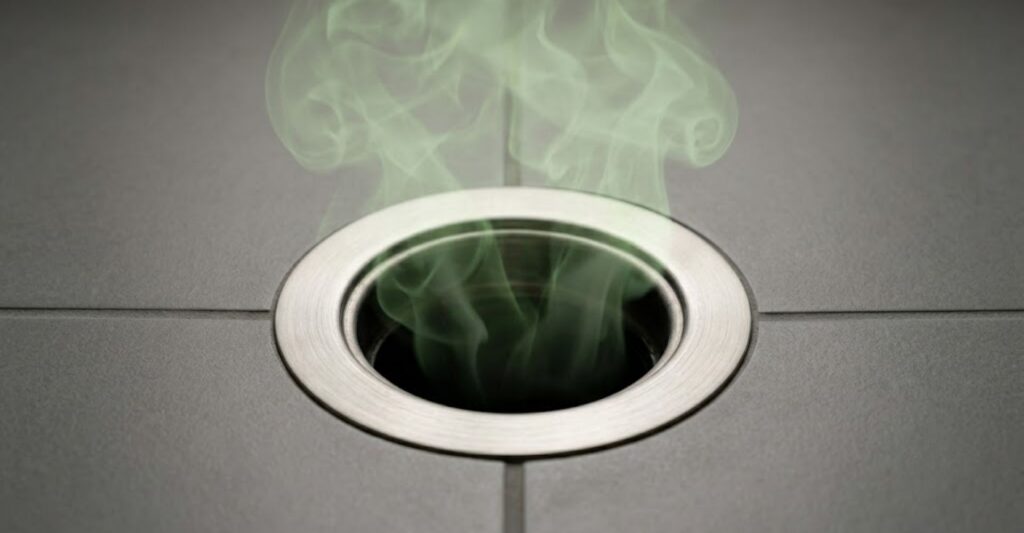
A bathroom should be a sanctuary of cleanliness and relaxation, but nothing destroys that atmosphere faster than the sudden, alarming presence of a foul sewer gas smell. This pervasive odor, often described as rotten eggs (hydrogen sulfide), is more than just unpleasant; it indicates a failure in your plumbing system that is allowing toxic sewer gases to seep into your living space.
If you are dealing with this urgent issue, understanding the common culprits—some of which you can troubleshoot yourself—is the key to restoring comfort and safety. Here are the four primary causes of sewer gas leaks in bathrooms and how our team can help you resolve them.
1. Dried-Out P-Traps
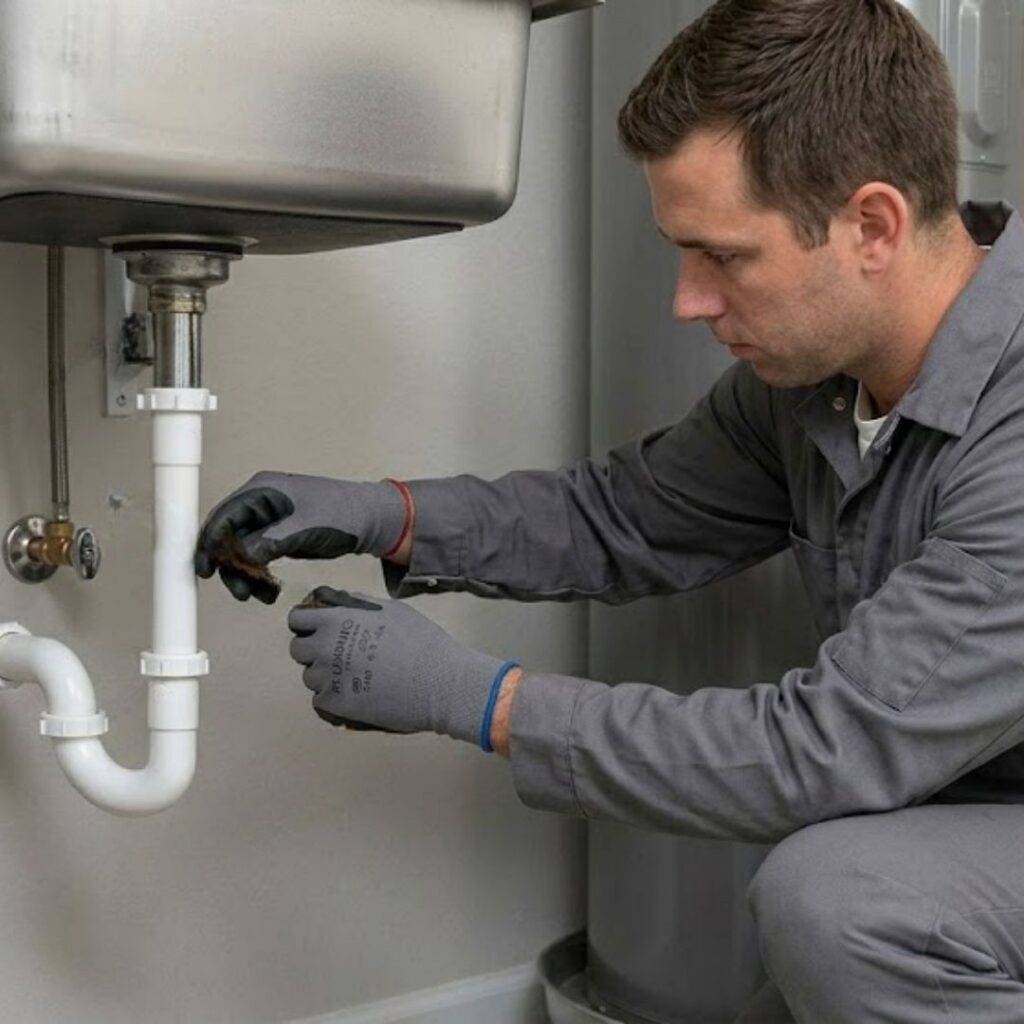
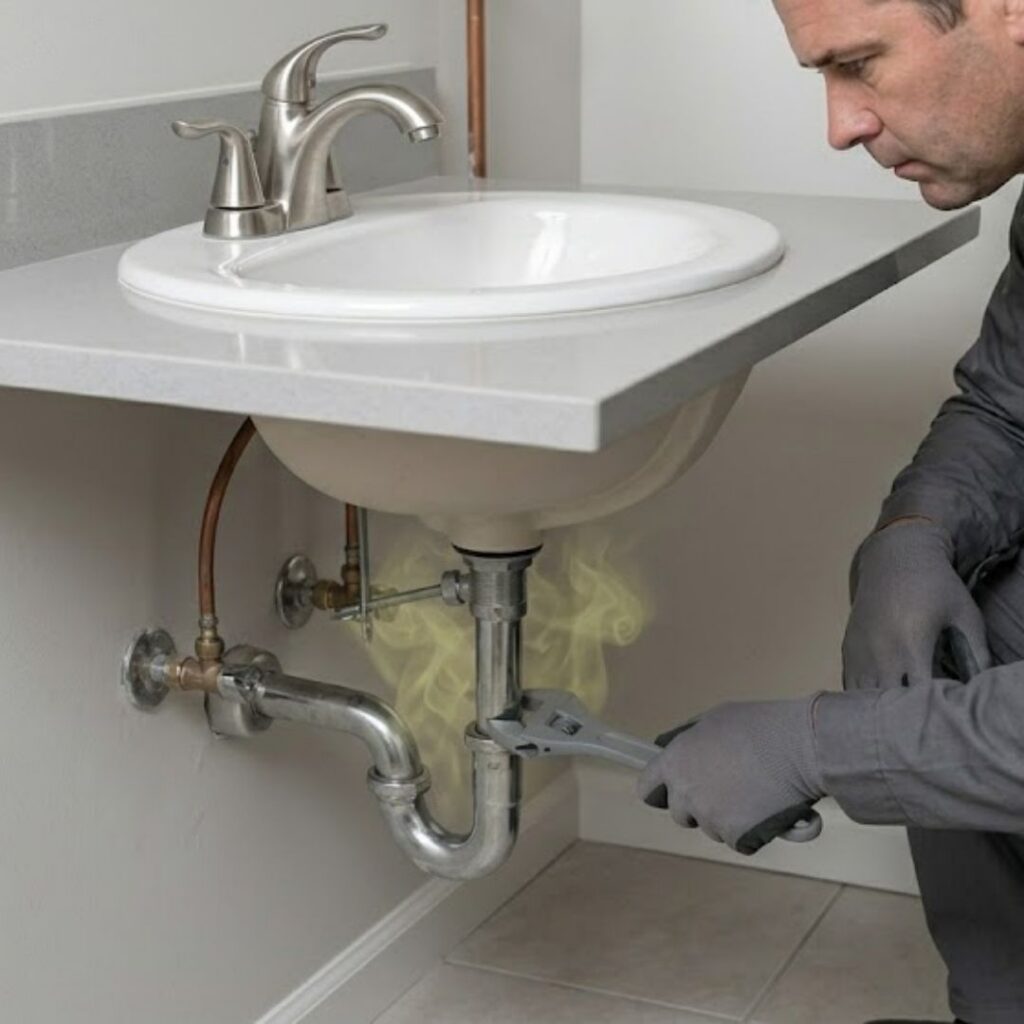
The most frequent and easiest-to-fix cause of a sewer gas smell in Poway is a dried-out P-trap. Every drain in your bathroom (sinks, showers, bathtubs) is equipped with a P-trap—the U-shaped pipe that permanently holds a small amount of water. This water acts as a critical seal, physically blocking sewer gases from rising up through the pipe and entering the room.
If a guest bathroom shower or sink has not been used for weeks or months, the water in the trap can slowly evaporate, breaking the seal.
How to Fix It: Simply run water down all unused drains for one to two minutes to refill the trap and re-establish the protective water barrier.
2. Loose or Defective Toilet Seals
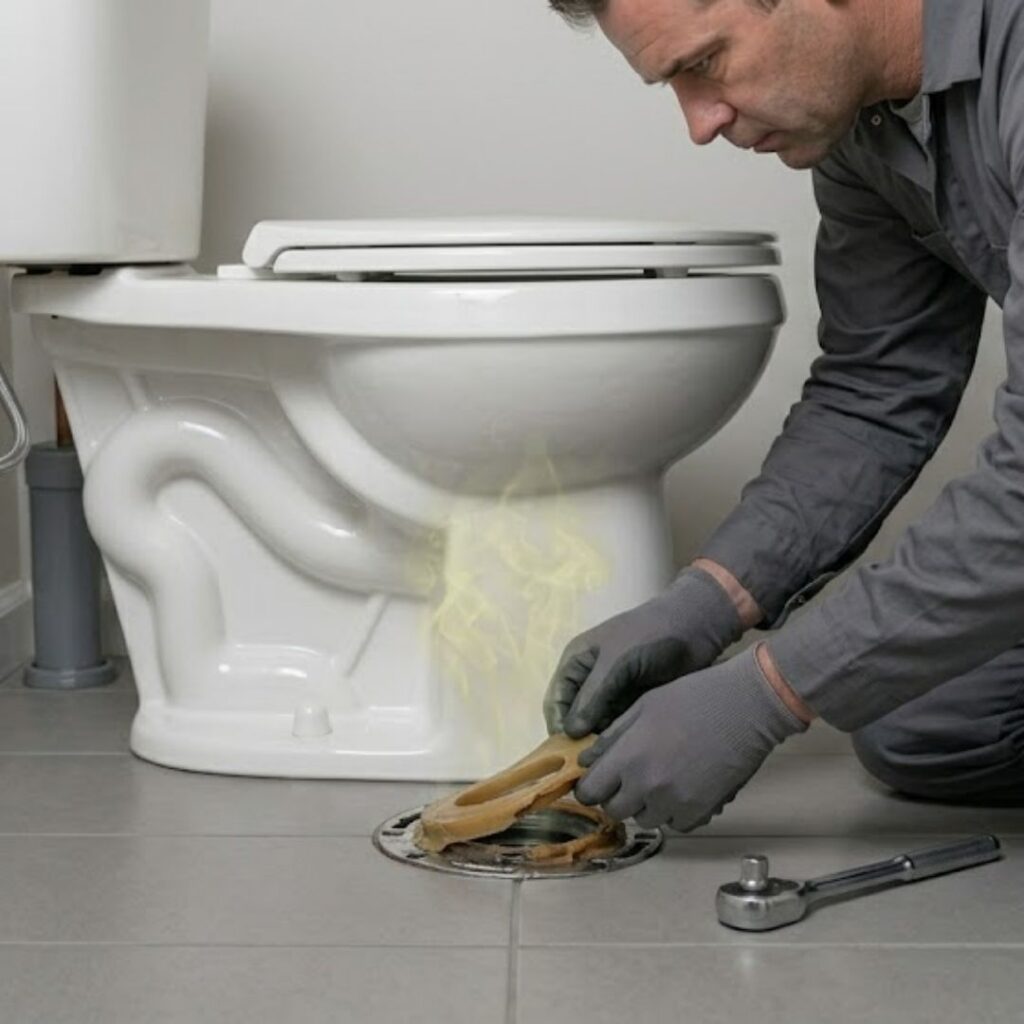
Your toilet is connected to the closet flange on the floor, sealed tightly by a wax ring. If this seal is broken—often due to a toilet that is loose and rocks slightly, or if the wax ring is old and has degraded—sewer gases can escape from directly underneath the base of the toilet. This smell is usually strongest at floor level near the fixture.
How to Fix It: While you can check the bolts securing the toilet to the floor, replacing a defective wax ring and reseating the toilet is a job best left to a professional plumber in San Diego to ensure a permanent, gas-tight seal.
3. Blocked Plumbing Vents
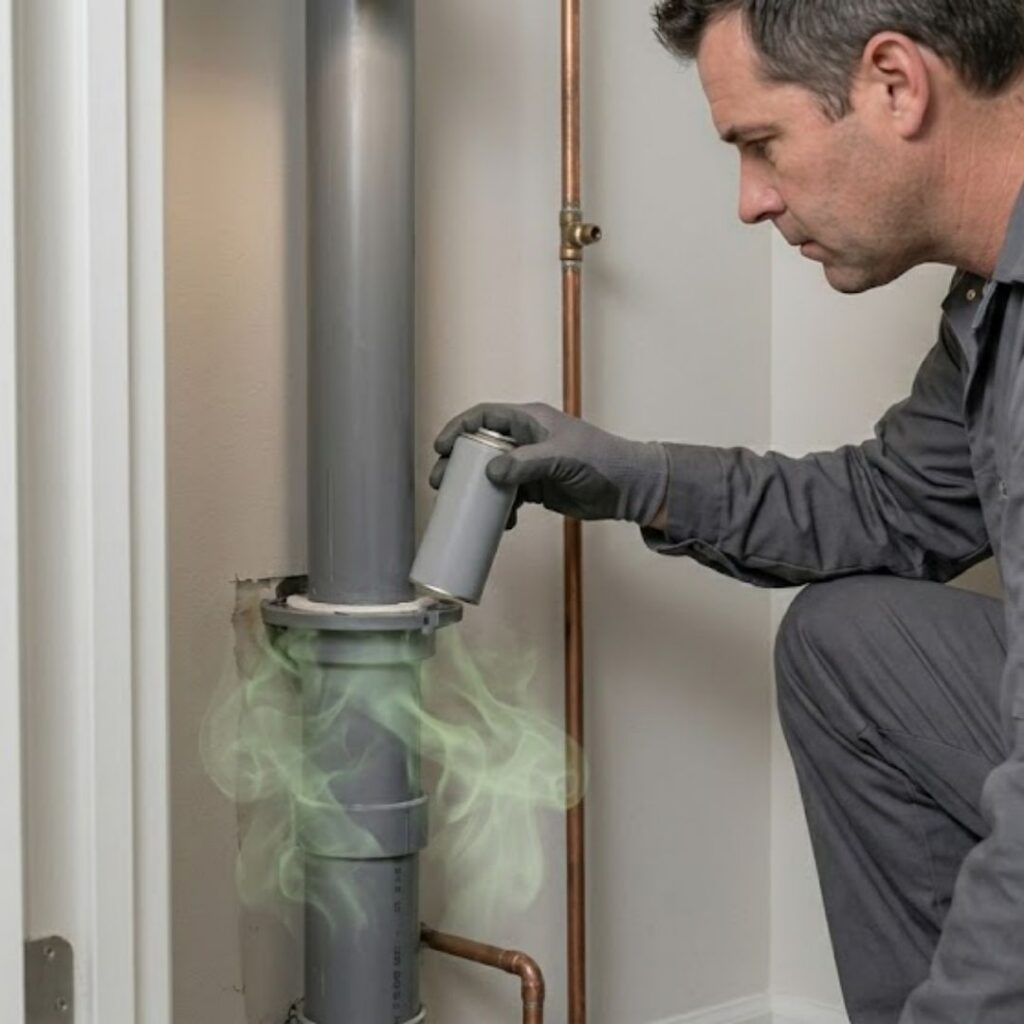
All plumbing systems are vented through the roof of your home. These generic unbranded vent pipes allow air to enter the drain lines, enabling wastewater to flow smoothly and equalizing pressure. If these vents are blocked (often by bird nests, leaves, or even ice in other climates), a vacuum can form in the drain lines.
When you flush the toilet or drain the tub, this vacuum will physically “siphon” the protective water out of nearby P-traps, breaking the critical gas seal.
How to Fix It: Clearing a roof vent requires safely accessing the roof and using specialized tools to remove the obstruction.
4. Cracked or Leaking Drain Lines
The most serious cause of a pervasive sewer gas smell is a crack or break in the drain-waste-vent (DWV) piping itself, often hidden inside the walls or beneath the foundation. In Poway’s older homes, shifting soil, pipe corrosion, or even invasive tree roots can compromise the integrity of these essential drain lines. A leak in these pipes allows gases to vent directly into the void spaces of your home before seeping into the bathroom.
How to Fix It: If the smell is persistent, does not fade after running water, or is accompanied by slow drains or gurgling noises, immediate leak detection is required.
Contact Your Professional Plumber in Poway
While running water down a dry drain is a simple DIY fix, recurring or pervasive sewer gas smells are an emergency that impacts your family’s health. Sewer gas can contain dangerous levels of methane and hydrogen sulfide.
Our expert team specializes in rapid diagnostics, pressure testing, and video pipeline inspection to locate hidden leaks. When you need a reliable plumber in Poway, we are ready to respond. Don’t live with dangerous odors—contact Plumbing Plus today to secure your home.